Custom Printed Patty Paper
Small white squares that go between raw patties so they stack, freeze and peel apart clean. Printed with a corner logo for butcher trays, catering packs and commissaries, with a free proof first.
What Are Patty Paper?
Patty paper is a small dry wax or grease-resistant square placed between hamburger patties so they do not stick together. It is also the pickup sheet for cheese and deli slices at the scale. It comes in slotted dispenser cartons so a cook can pull one sheet at a time.
| Sheet sizes | 4.75 x 5 in. · 5.5 x 5.5 in. · 6 x 6 in.; custom sizes on request |
|---|---|
| Paper stocks | Dry wax white (default), grease-resistant white, natural kraft |
| One spot color corner mark; outside face only | |
| Use | Between raw patties, under scale portions, between frozen stacks |
| Heat | Cold and warm holds; remove before grilling |
| Packing | Slotted dispenser cartons, packed in cases |
| Minimum | 1,000 sheets per print run |
Patty Paper Sizes
Standard sizes carry no cutting charge. Any other size is quoted on request; the deli paper size chart lists what each one wraps.
Small squares that stop patties sticking
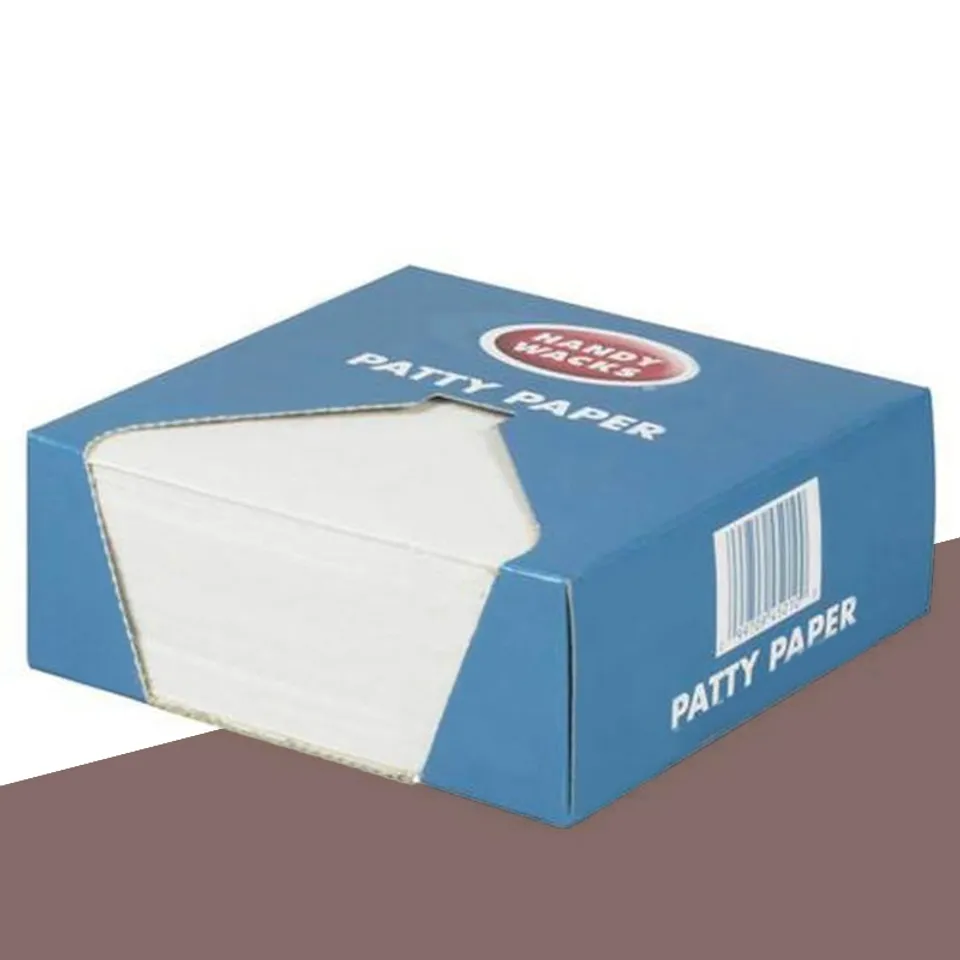
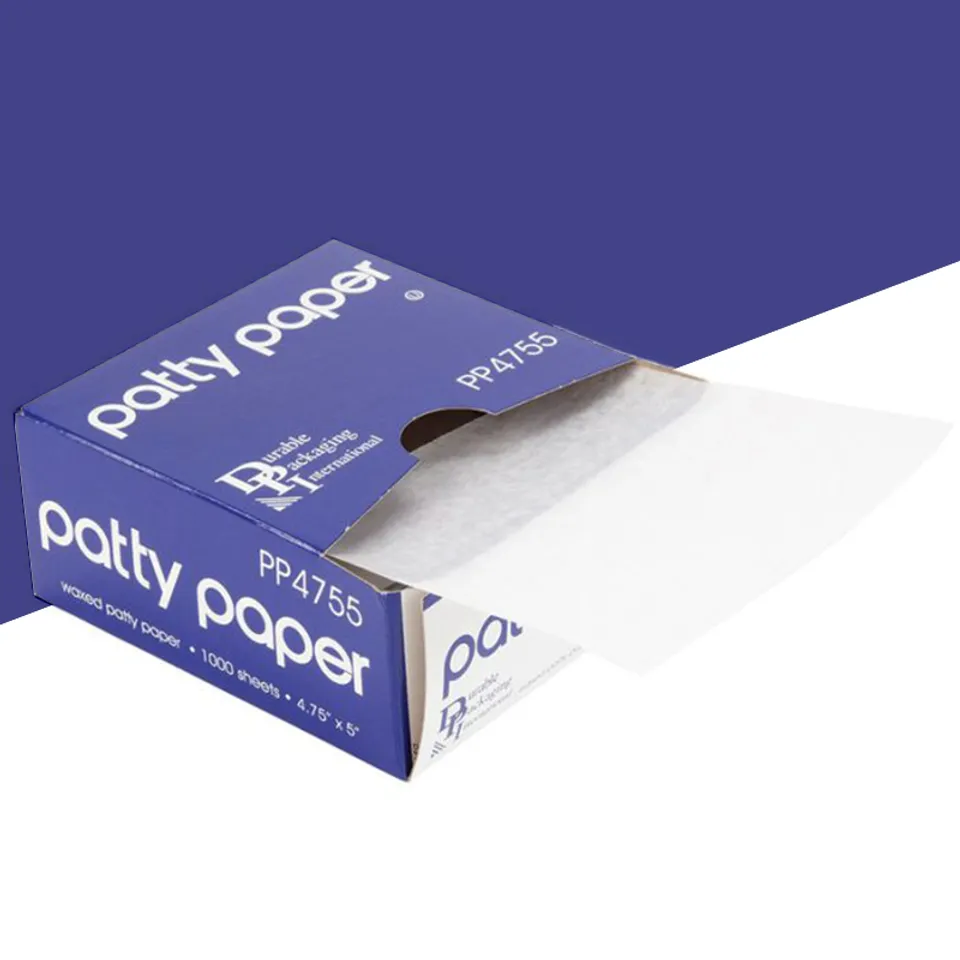
Patty paper is a small square of white sheet that goes between raw burger patties so they stack without sticking and peel apart clean on the line. The photos show it the way it arrives: a dispenser carton with the top cut open to show the stack, and a second carton with one sheet drawn out through the front slot.
Burger kitchens that form their own patties use it every morning. Butcher shops and meat counters layer it between patties sold in a tray. Commissaries that press thousands of patties for several locations use it by the case. Deli counters use the same square to lift a slice of cheese or a portion of pastrami onto the scale.
Printing it is a newer idea. A logo on the sheet shows in a retail tray at the butcher counter, in a catering pack of patties and in the walk-in of a franchise that wants its name on everything. The patty and fry paper range groups the three small-format sheets.
Dry wax or grease-resistant for patty sheets?
| Stock | Feel | Best for |
|---|---|---|
| Dry wax white | Soft, slight sheen, releases cleanly from cold fat | Stacking and freezing raw patties |
| Grease-resistant white | Firmer, matte, holds a sharper print | Scale sheets, cheese slices, retail trays |
| Natural kraft | Firmer, tan, muted print | Butcher counter display packs |
Dry wax is the standard patty sheet. The thin wax keeps beef fat from gluing the paper to the meat after a night in the walk-in. It is a cold and warm hold sheet, never an oven or microwave one, which is no problem for a square that comes off before the patty hits the grill. The heavier wax version has its own page as waxed patty paper for freezer stacks.
Which square fits a quarter-pound patty?
A quarter-pound patty pressed to about four inches wide fits the 4.75 x 5 sheet with a thin margin. That is the size most burger counters stock, and the one in the dispenser cartons on this page.
5.5 x 5.5 suits a third-pound or a smashed patty that spreads to five inches. The margin makes it easier to peel the sheet off with gloved fingers.
6 x 6 covers half-pound and pub-style patties, and it is the sheet deli counters prefer under cheese slices because the extra inch keeps fingers off the food. If you press an oblong patty for a hoagie roll, a custom rectangle is quoted on request.
Is a logo worth printing on patty paper?
For a kitchen that stacks patties in the walk-in and throws the paper away, no. The sheet is never seen. For anyone who sells or hands over a stack of patties, yes, because the paper is the only packaging between the patties.
- Butcher counters: a logo on every divider shows through a clear tray lid and travels home with the customer.
- Catering and meal-prep packs: a branded sheet between patties looks intentional rather than improvised.
- Franchise commissaries: a mark on the sheet identifies house patties from the other items in a shared cooler.
- Deli scale sheets: a small corner logo faces the customer as the slice is weighed.
One spot color in a corner is the usual print. The food-contact face stays unprinted, so a full-bleed repeat only shows on the top sheet of a stack. Set your mark on a photographed square on the Design Your Deli Paper page to see how small it can go.
Pressing, stacking, freezing: how the sheet behaves
Fresh patties stacked with a sheet between them hold their shape until the morning shift. The wax face against the meat releases without tearing, and the dry face against the next patty stops the stack sliding. Frozen stacks peel apart one at a time with the sheet still attached, and the sheet comes off as the patty thaws.
Under a patty press the square takes the full force without splitting. Press onto the sheet, lift the patty by the paper, and the patty keeps its edge.
On a deli scale the sheet stops cheese fusing to the pan and gives the server a grip. It is not a wrap. For a wrapped patty or a finished burger, the printed burger wrap paper page has the right sheet.
Dispenser cartons and pulling one sheet at a time
Patty paper is packed in dispenser cartons, the format in both photos. The carton sits on the prep table and the cook pulls one sheet through the slot with one hand, which keeps the other hand on the meat. Cartons pack into a case for delivery.
The minimum print run is 1,000 sheets, which is one carton at this format. A burger counter pressing 200 patties a day uses a carton a week, so most orders are several cases.
Store cartons dry and cool. Wax softens in a hot kitchen, so keep the case off the top of the reach-in. Reorders match the approved proof on file; reply to the quote email with the number of cases.
Patty paper mistakes made on the line
- Using a sheet too small for the press, so the patty edge bonds to the plate and tears.
- Leaving the sheet on through the grill, where wax has no business being.
- Stacking warm patties straight from the grinder, which melts the wax into the meat.
- Ordering a centered logo that the patty covers on every sheet but the top one.
- Choosing kraft for a scale sheet, where the customer expects to see white under their cheese.
How to get patty paper printed and delivered
- Pick the square size from the three standard cuts, or send a custom measurement.
- Choose dry wax or grease-resistant white.
- Send your logo as a vector file, or a photo of it for a free redraw.
- A written quote and a free PDF proof come back inside one business day.
- Approve the proof by email; the press run is 4 to 6 business days.
- Cartons reach any US address by free tracked delivery in 2 to 3 business days, and you pay by invoice.
If you are not sure whether to print at all, order the plain sheet first and add the logo on the reorder. Anything unclear is answered on the help pages for ordering deli paper.
Beyond burgers: other jobs for a patty square
The same square separates crab cakes, falafel, sausage patties and veggie burgers in a prep stack. Bakeries use it between cookie dough pucks in the freezer. Tortilla counters slide one between pressed masa rounds.
Ice cream shops use the 6 x 6 as a pickup sheet for cones and cookies. Coffee bars put one under a pastry on the saucer. Any time a small portion needs to be lifted, weighed or kept apart from the next one, the patty square is the smallest sheet that does it.
Each of those jobs is a different stock choice. Cold and fatty wants dry wax. Dry and crumbly wants grease-resistant white. Tell us what sits on the sheet and the quote names the stock.
Design Your Custom Patty Paper
Pick a sheet, see how your logo sits on it, then send it for the real proof. Patty Paper photos come first; every other product follows.
Upload your logo to see it on this sheet
Patty Paper Questions
The questions we answer most weeks. Pick a topic, open a row.
What is patty paper used for?
It separates raw burger patties so they stack without sticking, and the same square lifts cheese and deli slices onto a scale.
Is patty paper waxed on both sides?
Standard dry wax patty paper has one soft wax face against the meat. The grease-resistant version has no wax and is firmer.
Can patty paper go on the grill with the patty?
No. Peel it off before cooking; the wax sheet is meant for cold and warm holds, never the grill, oven or microwave.
Which patty paper size fits a quarter-pound patty?
4.75 x 5 fits a four-inch patty with a margin. Move to 5.5 x 5.5 for smashed or third-pound patties.
Can patty paper be printed with a logo?
Yes. A one-color corner mark is usual, laid down in food-safe soy and water-based ink on the outer face of the square.
Does a printed logo on patty paper touch the meat?
No. The ink sits on the outer face of the square and the face against the patty stays blank.
What is the minimum order of printed patty paper?
1,000 sheets per print run, roughly one dispenser carton. Larger runs are quoted in writing.
Does patty paper come in dispenser boxes?
Yes. Sheets are packed in a slotted carton so a cook can pull one with one hand, then cartons pack into cases.
How quickly can I get custom patty paper?
Allow 4 to 6 business days on press once the proof is approved, plus 2 to 3 business days of free tracked delivery inside the US.
Can I freeze patties with patty paper between them?
Yes. Stacks peel apart one at a time from frozen, and the sheet comes away as the patty thaws.
Can I order patty paper interfolded like deli sheets?
Patty squares come stacked flat in a carton. For an interfolded pop-up pack, see the interfolded deli sheets page.
What if patty paper arrives damaged?
Send photos inside 10 days and the damaged cartons are reprinted or refunded.
Related Products
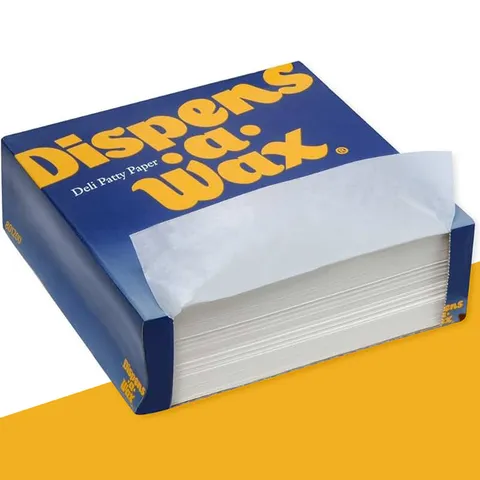 Waxed Patty PaperFrom $0.30 a sheet4.75 x 5 in. · 5.5 x 5.5 in. · 6 x 6 in.Patties that release cleanly from the sheet after freezing or chilling
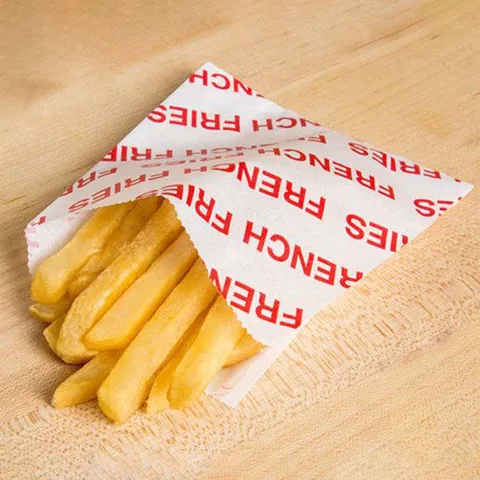 Fry PaperFrom $0.30 a sheet6 x 6 in. · 6 x 10 in. · 10 x 10 in.French fries, tots, onion rings and tenders in cups, boats and bags
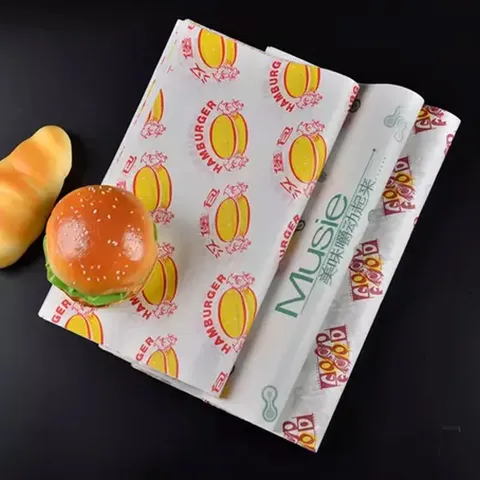 Burger Wrap PaperFrom $0.30 a sheet10 x 10 in. · 12 x 12 in. · 12 x 15 in.Burgers, sliders and chicken sandwiches for dine-in and takeout
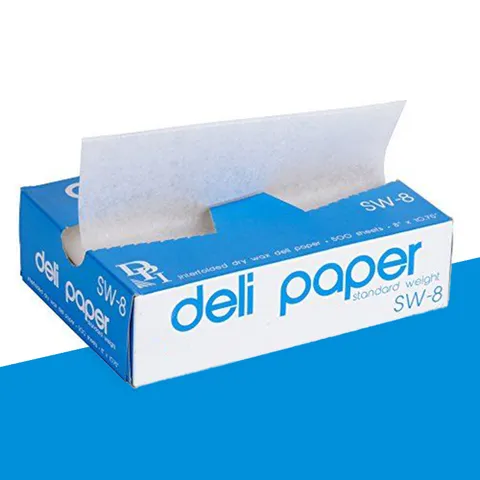 Interfolded Deli SheetsFrom $0.30 a sheet6 x 10.75 in. · 8 x 10.75 in. · 10 x 10.75 in. · 12 x 10.75 in.Pop-up sheets from a dispenser box for counters, bakeries and delis
Tell us about your order
Send the product, a sheet size and roughly how many sheets you go through in a month. We reply in writing within one business day with a price and a free design proof. Prefer to talk? Call (503) 461-4788 or message us on WhatsApp.
- Minimum order 1,000 sheets
- Production in 4–6 business days after you approve the proof
- Free tracked delivery in the US in 2–3 business days
- Food-safe soy and water-based inks