How Restaurants Use Custom Deli Paper: Wraps, Liners and Counter Service
By the team at Deli Papers ·
Printed deli paper is one of the few things a customer touches, sees and carries out of a restaurant, and it costs less per use than almost anything else on the table. This guide walks through where each type of operator puts the sheet to work and how to plan the first order.
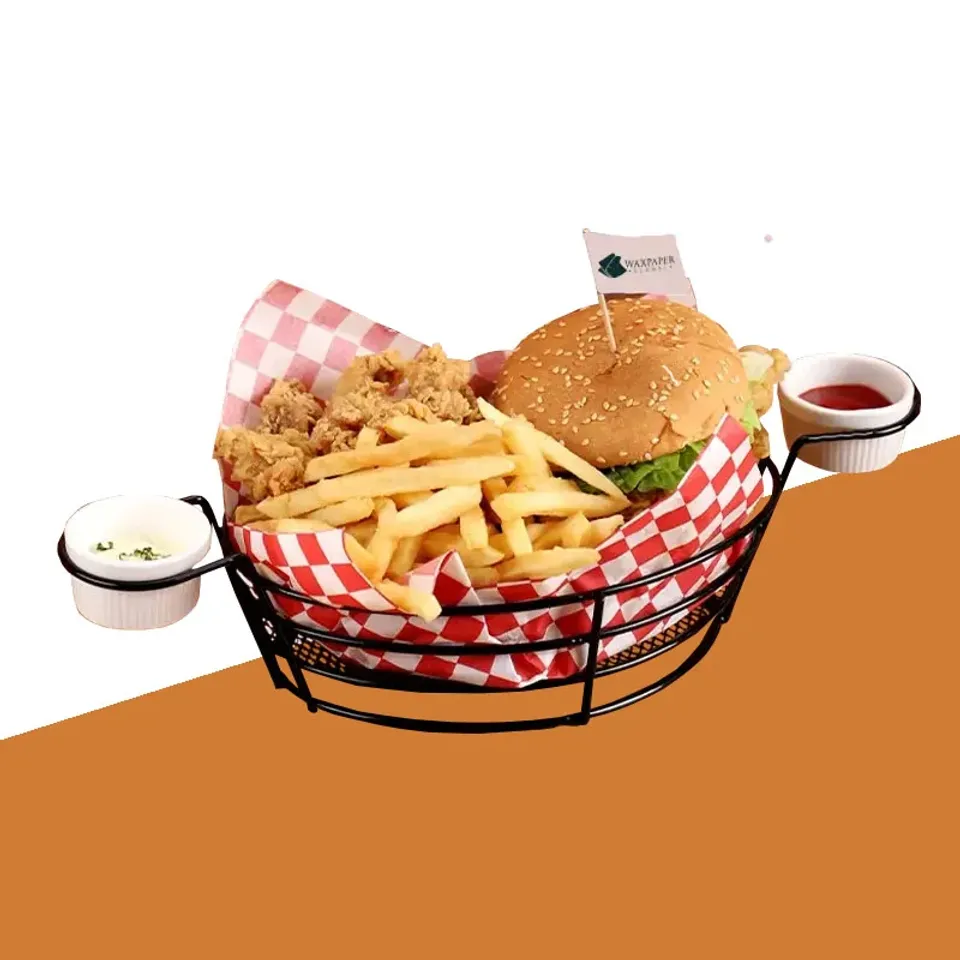
Where does printed paper do its work in a service?
A sheet of deli paper is touched by the cook at the pass, by the server carrying the basket, and by the customer unwrapping lunch. If it carries a logo, that logo is seen three times per order and once more in every photo the customer posts. Few other items on the floor get that exposure for so little.
The practical jobs come first, though. The sheet keeps grease off the basket, holds a burger closed in the bag, stops a burrito leaking and keeps a pastry case clean. The print is a bonus on top of a job the paper was doing anyway.
Burger joints: the wrap, the basket and the bag ride home
A burger counter uses two sheets. A 12 x 12 on grease-resistant white wraps the burger with two folds and a tuck; the paper holds the bun together and takes the grease from the patty. The same sheet, or a red check liner, goes in the basket under fries for dine-in.
Takeout is where the wrap matters most. The parcel sits in a bag for twenty minutes, and a sheet that breathes keeps the bun from steaming soft. A repeat logo means the mark shows when the bag is opened, whichever way the burger was folded. The printed burger wrap paper page sizes the sheet against single, double and loaded builds.
Smash burger spots on a dark counter often switch to black stock with a white repeat. Grease shows less, and the sheet matches the room.
Delis and sub shops: long rolls and pop-up sheets
A deli works at two stations. At the slicer, interfolded sheets pull one at a time from a dispenser box to catch sliced meat and cheese and to separate portions on the scale. At the sandwich board, a 12 x 15 or 15 x 15 sheet rolls a sub end to end and tucks.
Cold subs go on dry wax, which drapes around the bread and holds moisture off the outside. Toasted subs go on grease-resistant white so the melted cheese does not reach the print. A deli with both usually orders both stocks in the same design.
The sheet also doubles as the plate for a dine-in half sandwich: a 12 x 12 under the sandwich with a pickle beside it, and the plate stays clean for the next seating.
Taquerias and food trucks: wet fillings and one hand
A truck has no table, so the paper has to be the plate. Tacos are folded in a 10 x 10 or 12 x 12 sheet creased in half, so the customer holds the paper and the taco stays upright. Burritos are rolled in a 12 x 15 on grease-resistant kraft, which stops salsa reaching the outside and hides any spot that does.
Kraft with a one-color print is the common truck order because it looks right beside a chalkboard menu and costs less in ink than a bright white sheet. White ink on kraft gives a lighter mark where the brand needs it.
Food trucks also lean on the sheet for speed. A pre-folded stack of 12 x 12 sheets at the window lets one person wrap, hand over and take the next order without looking down. Read the burrito wrapping paper page for the fold that holds a wet burrito.
Barbecue and wings: trays, boards and sauce
Barbecue is served by the pound on paper. A 15 x 15 sheet of grease-resistant kraft lines a metal tray, the meat goes straight on it, and pickles, onions and bread sit beside. The sheet takes the sauce and the tray stays clean. Sliced meat sold to go is wrapped in the same kraft and weighed on the sheet.
Wing counters use the sheet as a basket liner, often newsprint or a red check, with a 12 x 15 for a platter. Grease-resistant stock keeps the sauce on the surface so the basket is not the thing that gets wet. A printed liner here is seen flat and never folded, so a centered logo works as well as a repeat.
Bakeries and cafes: bags, sheets and the pastry case
Bakeries use paper in three places. A dry wax bag takes a cookie, a muffin or a half sandwich over the counter. A dry wax sheet lines the pastry case and the bakery box, and sits between layers of cookies. A printed food bag in 8 x 12 carries a demi baguette or a loaf out the door with the logo on the front.
Dry wax suits all of it because the food is buttery rather than oily, and the soft sheet folds around a croissant without crushing it. A plain kraft wax bag with a one-color stamp-style logo is the usual first order, and the wax paper bags page lists the three bag sizes against cookies, muffins and bagels.
Cafes with a toasted sandwich menu add a 12 x 12 grease-resistant sheet for the hot line, printed in the same mark.
How much printed paper does a counter go through?
The number that decides your order is sheets per day. One sheet per wrapped item and one per basket is the usual count, with extras for the counter and spills. The table gives rough daily use for a single location so you can size the first run and the reorder.
| Operation | Sheets per order | Typical daily use | First run that lasts a month |
|---|---|---|---|
| Burger counter | 1 wrap, 1 liner per basket | Twice the daily ticket count | Two runs of 1,000 to 2,000 each |
| Sub shop | 1 per sandwich, 1 interfolded per deli sale | Ticket count plus deli slices | One run per size, 1,000 to 2,000 |
| Taqueria or truck | 1 per taco or burrito | Ticket count times items | Two runs, tacos and burritos |
| Barbecue counter | 1 tray sheet, 1 wrap per to-go pound | Ticket count plus to-go weight | One run of 15 x 15, 1,000 plus |
| Bakery or cafe | 1 bag per item, 1 sheet per box | Item count plus boxes | One bag run, one sheet run |
Every run is a minimum of 1,000 sheets, so a counter doing forty tickets a day uses a run in under a month. Order enough to cover the 4 to 6 business days of printing plus 2 to 3 business days of delivery before the next one.
Is one printed sheet enough for a multi-location group?
Usually not, but not for the reason owners expect. A group with the same menu at every site can run one design, one stock and one size across all of them, and that keeps every location looking the same. The trouble is portion variety. If one site sells footlongs and another does not, they need different sizes.
- One approved proof reused across every reorder keeps the mark identical at each site
- Separate runs per size, each at least 1,000 sheets, shipped to whichever address needs them
- A single written quote covering all sizes and all delivery addresses
- A stock per station rather than per site: grease-resistant for hot lines, dry wax for counters
- A reorder reference per location so the manager can reorder without new artwork
Delivery is free and tracked to any US address, so a group order can ship to five sites from one quote. Our deli paper stocks guide helps decide which station gets which paper.
Rolling printed paper out across a menu
- Pick the one item you sell most and print a sheet for it first. For most operators that is the burger, the sub or the burrito.
- Measure that item finished and choose the smallest standard size that closes it. Pick the stock by whether it is hot and oily or cold and dry.
- Send the logo and ask for a written quote. It arrives within one business day, with a free PDF proof to follow.
- Approve the proof in writing. Printing takes 4 to 6 business days and delivery 2 to 3 business days after that.
- Run the first case for two weeks. Note how staff fold it, where grease shows and how often the logo faces up in the bag.
- Add the second size or the second stock on the next quote, using the same approved artwork.
Most operators end up with two or three sheets in one design. Adding them one at a time means each run is sized to real use rather than a guess.
What do customers notice about the paper?
Customers notice three things, in this order: whether the wrap kept the food together, whether the paper went soggy, and whether there was a logo on it. The first two are stock and size questions. The third is the print.
A repeat logo gets photographed because it is on the top face of every parcel. A centered logo on a liner gets seen because it sits between the burger and the fries. A soggy sheet gets noticed for the wrong reason, which is why the stock choice comes before the artwork.
If a case arrives with damage or a print that does not match the proof, send photos within 10 days and it is reprinted or refunded. The rest is up to the fold.
Products Mentioned in This Guide
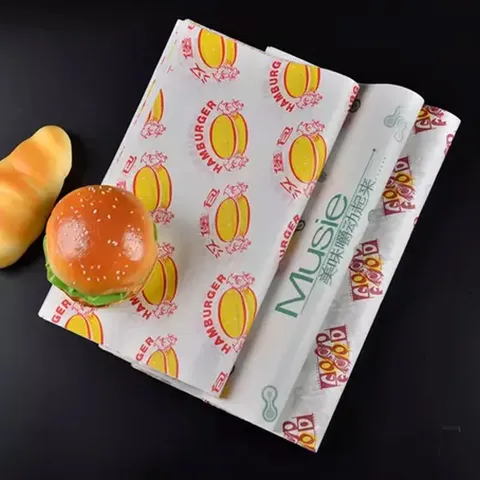 Burger Wrap PaperFrom $0.30 a sheet10 x 10 in. · 12 x 12 in. · 12 x 15 in.Burgers, sliders and chicken sandwiches for dine-in and takeout
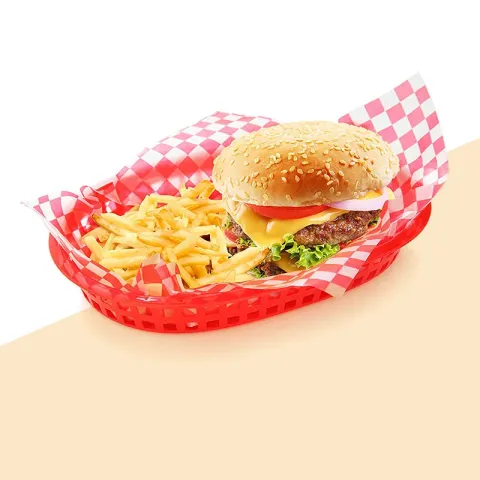 Red Checkered Basket LinersFrom $0.30 a sheet12 x 12 in. · 12 x 15 in. · 15 x 15 in.Burger and fry baskets, wings, barbecue trays
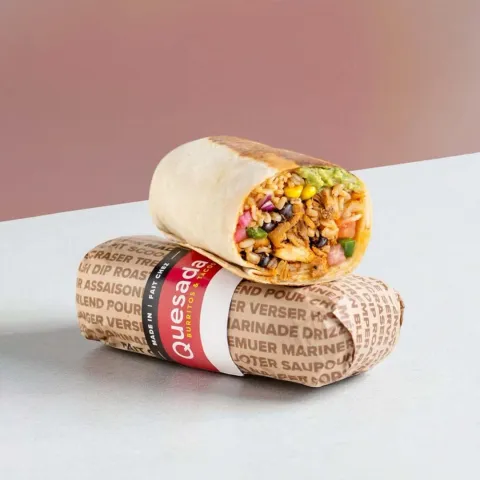 Burrito Wrapping PaperFrom $0.30 a sheet12 x 12 in. · 12 x 15 in. · 15 x 15 in.Burritos, quesadillas and wet fillings that need to stay sealed
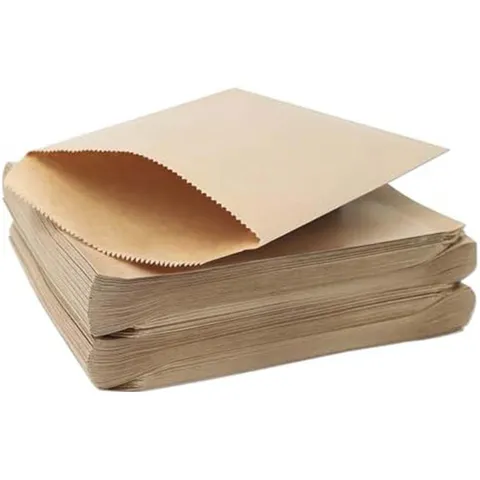 Wax Paper BagsFrom $0.30 a sheet6 x 6 in. · 6 x 8 in. · 7 x 9 in.Cookies, sandwiches, cured meats and bakery items sold by the bag
Questions About This Guide
The questions we answer most weeks. Pick a topic, open a row.
Which printed deli paper should a burger joint order first?
A 12 x 12 grease-resistant white wrap with a repeat logo. It closes a quarter-pound or half-pound burger and doubles as a basket liner for dine-in.
How many sheets should a restaurant order for its first custom deli paper run?
At least 1,000, which is the minimum per product. Count one sheet per wrapped item and one per basket for a day, then order enough to cover a month plus the reprint lead time.
Can a restaurant group ship one deli paper order to several locations?
Yes. All sizes and delivery addresses go on one written quote, and each run ships by free tracked delivery to any US address.
How soon can a food truck get printed deli paper?
Allow one business day for the written quote, 4 to 6 business days for printing after proof approval, and 2 to 3 business days for free tracked delivery.
What stock do taquerias use for custom printed deli paper?
Grease-resistant kraft, usually with a one-color or white-ink print. It stops salsa from reaching the outside and hides any spot that shows.
Which deli paper stock keeps a takeout burger bun from going soft?
Grease-resistant white. It takes the patty grease and breathes a little in the bag, where a sealed wrap would trap steam against the bun.
Do bakeries print the same deli paper as burger counters?
No. Bakeries use dry wax bags and sheets because pastries are buttery rather than oily. A cafe with a hot sandwich line adds a grease-resistant sheet in the same design.
Does a restaurant need a new proof for each location's reorder?
No. The approved proof is reused for every reorder, so a location manager needs only the order reference and the quantity for a new written quote.
Where should a logo sit on a restaurant basket liner?
Either centered or in a repeat. A liner is laid flat and never folded, so a centered logo sits visible between the burger and the fries.
Does a food truck wrap use a different layout from a dine-in wrap?
No. Both use a repeat so the logo lands on the top face however the sheet is folded. The truck usually picks kraft with one color; the dine-in counter often picks white.
Tell us about your order
Send the product, a sheet size and roughly how many sheets you go through in a month. We reply in writing within one business day with a price and a free design proof. Prefer to talk? Call (503) 461-4788 or message us on WhatsApp.
- Minimum order 1,000 sheets
- Production in 4–6 business days after you approve the proof
- Free tracked delivery in the US in 2–3 business days
- Food-safe soy and water-based inks