Deli Paper Stocks Explained: Dry Wax, Grease-Resistant, Kraft, White and Black
By the team at Deli Papers ·
Five paper stocks cover almost every printed sheet a US kitchen buys, and each one fails in a different way when it is used for the wrong job. This guide describes how every stock looks, folds, handles grease and takes ink so you can match it to your menu before you ask for a quote.
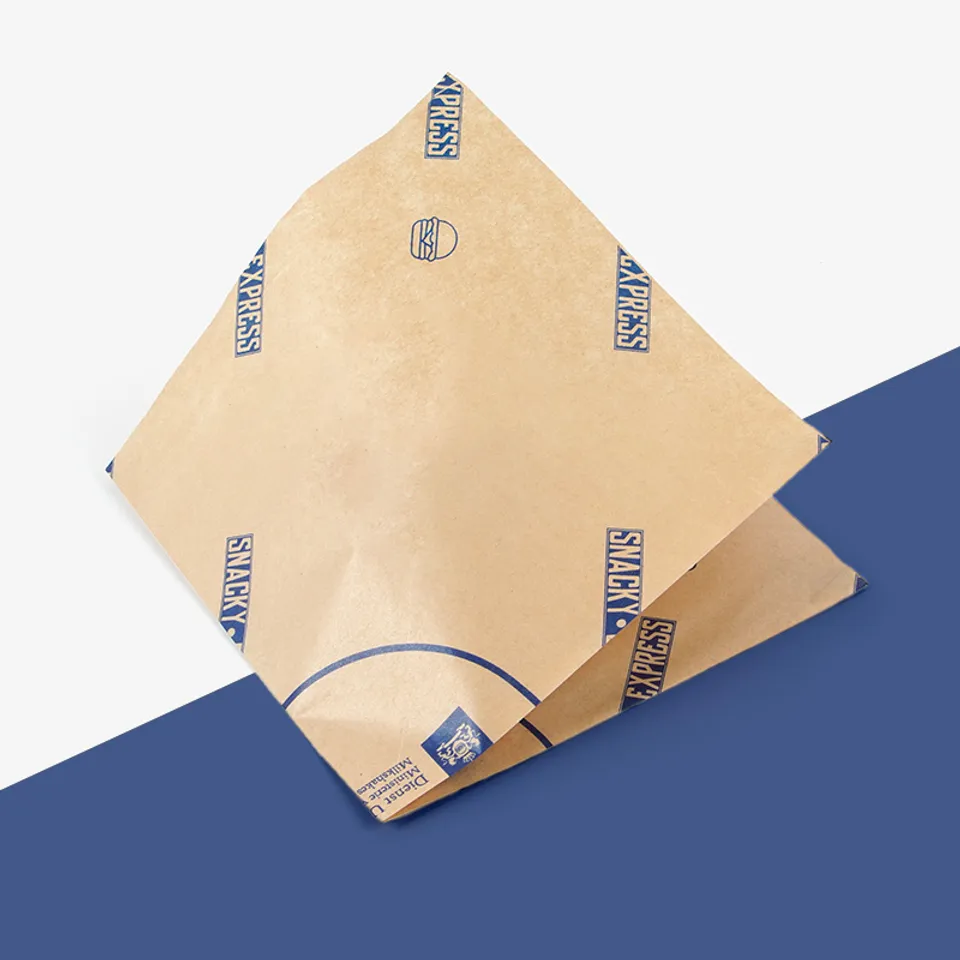
Five stocks, one question: what is the sheet doing?
Every deli paper stock is a trade between three things: how it resists grease, how it folds, and how it shows ink. No single stock wins all three. Grease-resistant paper hides fat but has a firmer hand. Dry wax folds softly and beads moisture but goes limp under hot oil. Kraft hides stains and costs nothing in ink to look good, but will not print full color.
So the first question is not which stock is best. It is what the sheet has to do: wrap a hot burger, line a basket under fries, pull from a dispenser, sit under a pastry, or carry a logo under bar lighting. Answer that and the stock usually picks itself.
Dry wax: the soft sheet with a sheen
Dry wax is paper with a wax finish worked into the surface rather than coated on top. The result is a sheet with a soft hand, a slight sheen and a faint translucency. It drapes around a bagel or a pastry without creasing hard, and water beads on it rather than soaking in.
It is the stock for cold and warm holds. A deli sandwich wrapped at the slicer, a croissant from the morning bake, a sheet between layers of fudge: all fine. Hot oil is the limit. Fries straight from the fryer soften it, and it never goes in the oven or the microwave.
On the print side, dry wax takes one, two and three spot colors cleanly. Full color is possible on the bleached white version. The sheen lifts a flat color slightly, so a brand red looks a touch glossier than on plain paper.
Grease-resistant white: the sheet for hot food
Grease-resistant white is the stock most burger counters should start with. It has a matte face, a firm fold and a bright surface that prints spot colors and full color without any dulling. Its real job is hiding grease: a patty can sit on it for ten minutes and the outside face stays dry to the eye.
The firmer hand matters at the wrap station. A sheet that holds a crease lets staff fold and tuck without tape, and the parcel stays closed in the bag. The same firmness makes it less pleasant around a soft pastry, which is where dry wax takes over.
It also lines baskets, boats and bags. Oil from fries stays in the sheet rather than marking the basket, which is why the burger wrap paper and fry paper pages both default to it.
Grease-resistant kraft: the same hold with a brown face
Grease-resistant kraft behaves like grease-resistant white and looks like a paper bag. The brown face hides the spots white would show, which is why barbecue counters and taquerias lean on it for sauce-heavy food. A brisket sandwich wrapped in kraft looks the same at the table as it did at the pass.
Ink on kraft reads differently. Dark spot colors, black and deep red print well. Pale colors and full color do not, because the brown shows through the ink. White ink is the answer for a light mark: it sits on top of the kraft and reads clearly from across a room.
The trade is brightness. If your brand lives on a white background with a pastel palette, kraft will mute it. Ask for both proofs and look at them side by side.
Natural kraft and bleached white for dry food
Natural kraft and bleached white are plain papers without the grease-resistant layer. They fold crisply, print well and cost less in the quote, and they are the right choice when the food is dry. A bread roll, a cookie in a bag, a tray sheet under a boxed lunch, a counter sheet under sliced meats: none of these need grease hold.
Put a hot cheeseburger on natural kraft and a translucent spot appears within a minute. The sheet still works, but the print around the spot looks wet. Bleached white shows the spot even faster. Use them where oil is not part of the service.
Bleached white is the brightest stock we print, and it is the one to pick for full-color patterns, photo-style artwork and any logo with light tints.
Black deli paper: when does white ink make sense?
Black stock is a dark-themed sheet for bars, late-night counters and smash burger spots that keep the room dim. Under a pendant light a black sheet with a white repeat looks sharp and the food stands out against it. The black checkered pattern in our basket liner photos is the same idea with a stock pattern instead of a logo.
White ink is the only sensible print on black. Colored inks sink into the dark face and vanish. A one-color white repeat is the standard order, and a second spot color in a bright red or gold is possible for a brand that needs it.
Grease shows less on black than on any other stock, which makes it a quiet favorite for wings and loaded fries. The black checkered deli paper page shows the look under food.
Which stock prints full color and which does not?
Full color is for white stocks only: grease-resistant white, bleached white and bleached dry wax. Everything else takes spot colors or white ink. The table below lines the five stocks up by print option and by the food they suit.
| Stock | Face | Print options | Suits |
|---|---|---|---|
| Dry wax | Soft, slight sheen | Spot colors; full color on white | Cold sandwiches, pastries, candy, interfolded sheets |
| Grease-resistant white | Matte, bright, firm | Spot colors or full color | Burgers, fries, fried chicken, hot wraps |
| Grease-resistant kraft | Matte brown, firm | Dark spot colors, white ink | Barbecue, burritos, tacos, sauce-heavy food |
| Natural kraft | Plain brown | Dark spot colors, white ink | Bread, dry sandwiches, counter sheets |
| Bleached white | Plain bright white | Spot colors or full color | Dry bakery items, patterns, tray sheets |
| Black | Flat black | White ink, one bright spot color | Bars, dark counters, wings, loaded fries |
Inks are soy and water-based and go on the outside face only. The side that touches food stays unprinted on every stock in this table.
How does each stock behave hot, cold and in a bag?
A sheet's job does not end at the counter. Takeout orders sit in a bag for twenty minutes, and the stock decides whether the food arrives crisp or steamed.
- Dry wax: fine cold or warm, softens under hot oil, never in the oven or microwave
- Grease-resistant white and kraft: hold a hot wrap closed in a bag and keep the outside dry
- Natural kraft and bleached white: crisp fold for dry food, translucent spots under anything oily
- Black: hides grease visually but needs a grease-resistant base for fried food, which we quote on request
- Any stock: a fully sealed wrap traps steam, so fold the ends rather than taping them shut
None of our stocks are rated for oven or microwave use, and we do not print hold times or temperatures on a quote.
Picking a stock for your menu in four steps
- List the three items you wrap or line most. Mark each one hot or cold, and oily or dry.
- Anything hot and oily goes on grease-resistant white or kraft. Anything cold goes on dry wax or bleached white. Dry bread goes on natural kraft.
- Hold your logo against the stock color. Pale marks on kraft need white ink; full color needs a white stock.
- Ask for the free PDF proof on your first-choice stock and, if you are torn, a second proof on the other. Proof changes are free before approval.
Most menus end up with two stocks: grease-resistant for the hot line and dry wax or kraft for the counter. The custom printed deli paper page lets you quote the general sheet on any of the five.
Stock swaps that cause trouble after delivery
The most common problem we see is dry wax ordered for a fry station because the sample felt nicer in the hand. It did, and then it went limp under the first basket. The second is natural kraft ordered for a burger because the quote was lower. The burger was fine; the printed sheet looked wet in every photo customers posted.
The third is a pale logo on kraft without white ink. The proof shows the color sinking, and the fix is free before approval, so look at the proof on a screen at full size rather than on a phone.
If a delivered run was printed on the wrong stock against your approved proof, send photos within 10 days and we reprint it. If the stock matches the proof but the choice was wrong for the food, the next run is quoted in writing on the right one.
Products Mentioned in This Guide
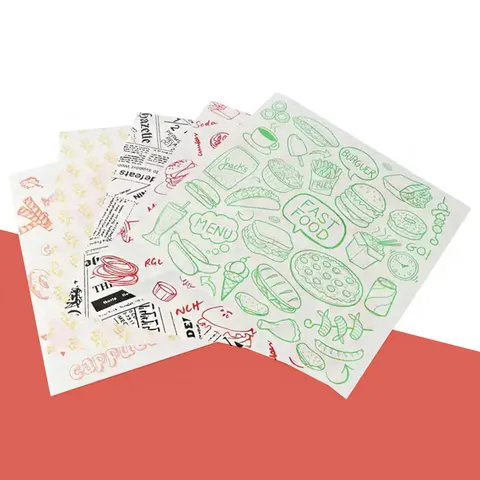 Custom Printed Deli PaperFrom $0.30 a sheet12 x 12 in. · 12 x 15 in. · 15 x 15 in.Sandwiches, burgers, counter service and tray lining with a logo or pattern
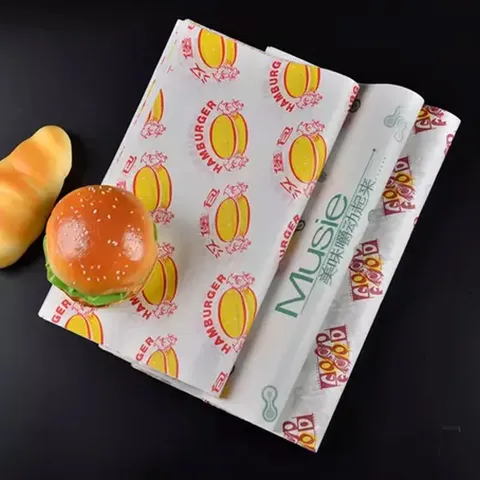 Burger Wrap PaperFrom $0.30 a sheet10 x 10 in. · 12 x 12 in. · 12 x 15 in.Burgers, sliders and chicken sandwiches for dine-in and takeout
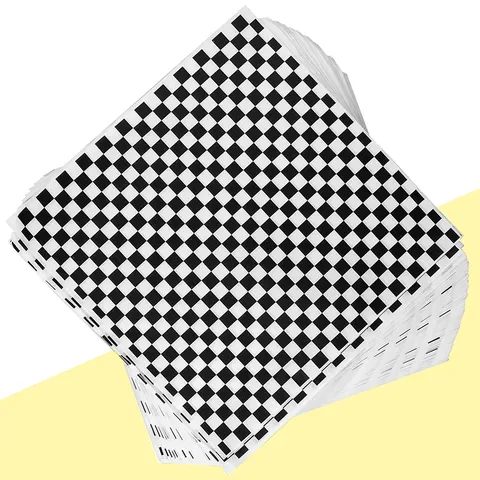 Black Checkered Deli PaperFrom $0.30 a sheet12 x 12 in. · 12 x 15 in. · 15 x 15 in.Dark-themed counters, waffle fries, burgers and bar food
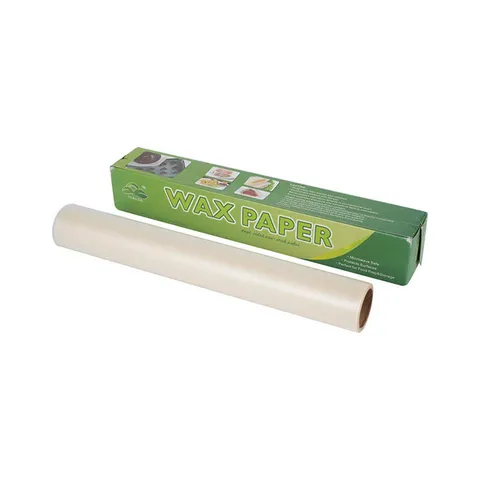 Printed Wax Paper SheetsFrom $0.30 a sheet12 x 12 in. · 12 x 15 in. · 15 x 15 in.Bakery counters, charcuterie, candy and gift wrapping
Questions About This Guide
The questions we answer most weeks. Pick a topic, open a row.
Which deli paper stock should a new burger counter start with?
Grease-resistant white in 12 x 12. It hides patty grease, holds a fold in the bag and prints spot or full color. Add dry wax later for cold items.
Is dry wax deli paper the same as the wax paper in a grocery store?
No. Dry wax has the wax worked into the fiber, so it feels like soft paper rather than a coated sheet. It prints on the outside face and suits cold and warm holds.
Does grease-resistant kraft hide sauce better than grease-resistant white?
Visually, yes. Both stop the sauce from reaching the outside face, but any spot that does show is far less obvious on the brown kraft than on bright white.
Can black deli paper be used for hot fried food?
Yes, when it is made on a grease-resistant base, which we quote on request. The black face hides grease well, and white ink keeps the logo readable.
Which of the five stocks prints full color?
Grease-resistant white, bleached white and bleached dry wax. Kraft and black take spot colors or white ink only, because the dark face shows through light inks.
Does ink on deli paper stock ever touch the food?
No. Soy and water-based inks are printed on the outside face only, and the food-contact side stays unprinted on every stock we offer.
Can I get proofs on two different stocks before choosing?
Yes. Ask for a second proof when you send the artwork. Both proofs are free, and changes to either are free until you approve one in writing.
Is there a minimum order per stock?
The minimum is 1,000 sheets per product print run. If one design runs on two stocks, that is two runs, each with its own minimum.
Do all five deli paper stocks ship at the same speed?
Yes. Every stock prints in 4 to 6 business days after proof approval and ships by free tracked delivery to any US address in 2 to 3 business days.
What if the delivered stock does not match my approved proof?
Send photos of the sheets and the case within 10 days. A run printed on the wrong stock is reprinted or refunded.
Tell us about your order
Send the product, a sheet size and roughly how many sheets you go through in a month. We reply in writing within one business day with a price and a free design proof. Prefer to talk? Call (503) 461-4788 or message us on WhatsApp.
- Minimum order 1,000 sheets
- Production in 4–6 business days after you approve the proof
- Free tracked delivery in the US in 2–3 business days
- Food-safe soy and water-based inks